THE CURTAIN JOURNAL / PRACTICAL INSPIRATION
How to layer sheer and main curtains
Plan a sheer and main curtain pairing around daylight, evening privacy, independent layers, track clearance and physical sample comparisons.
Published
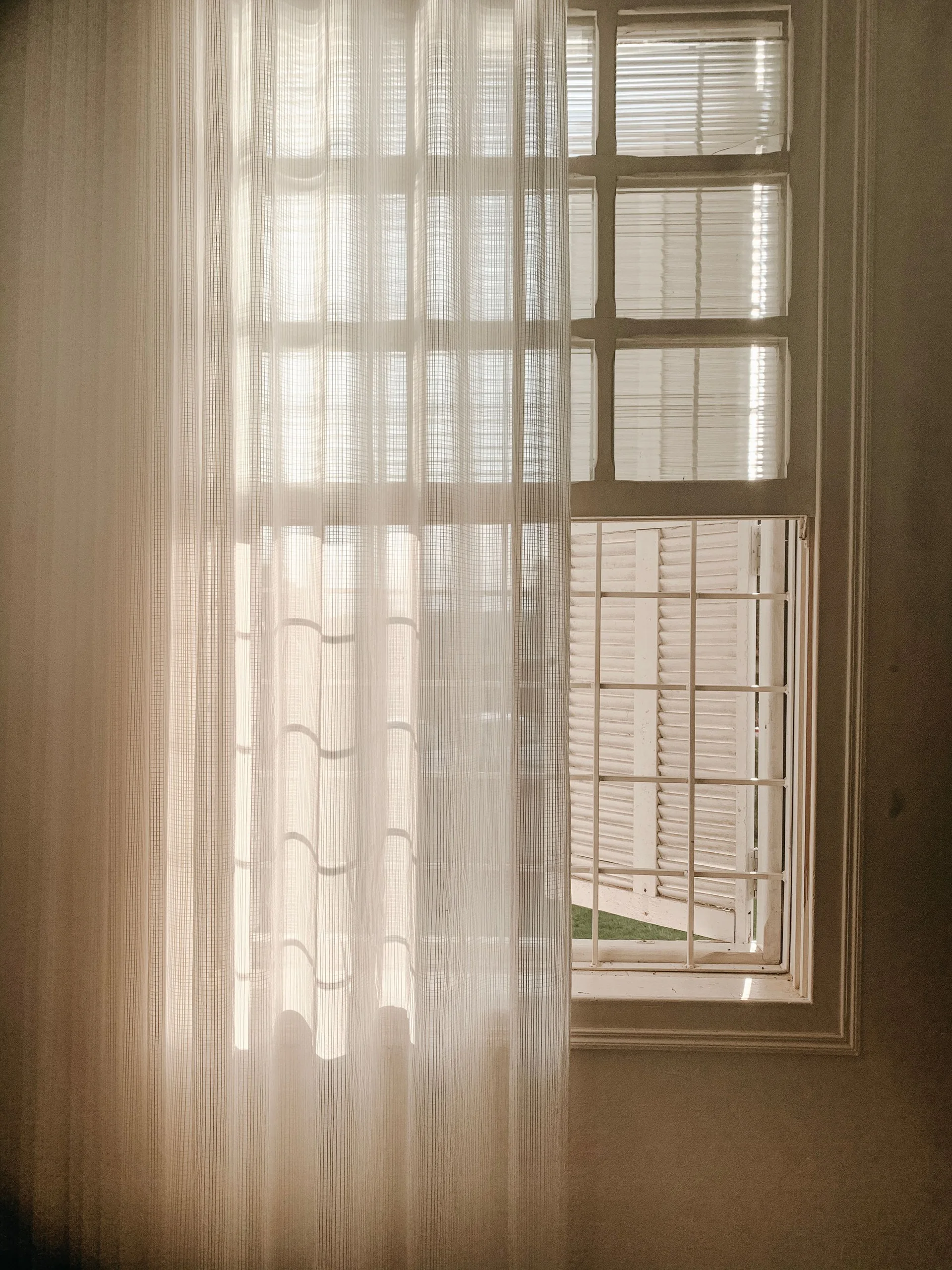
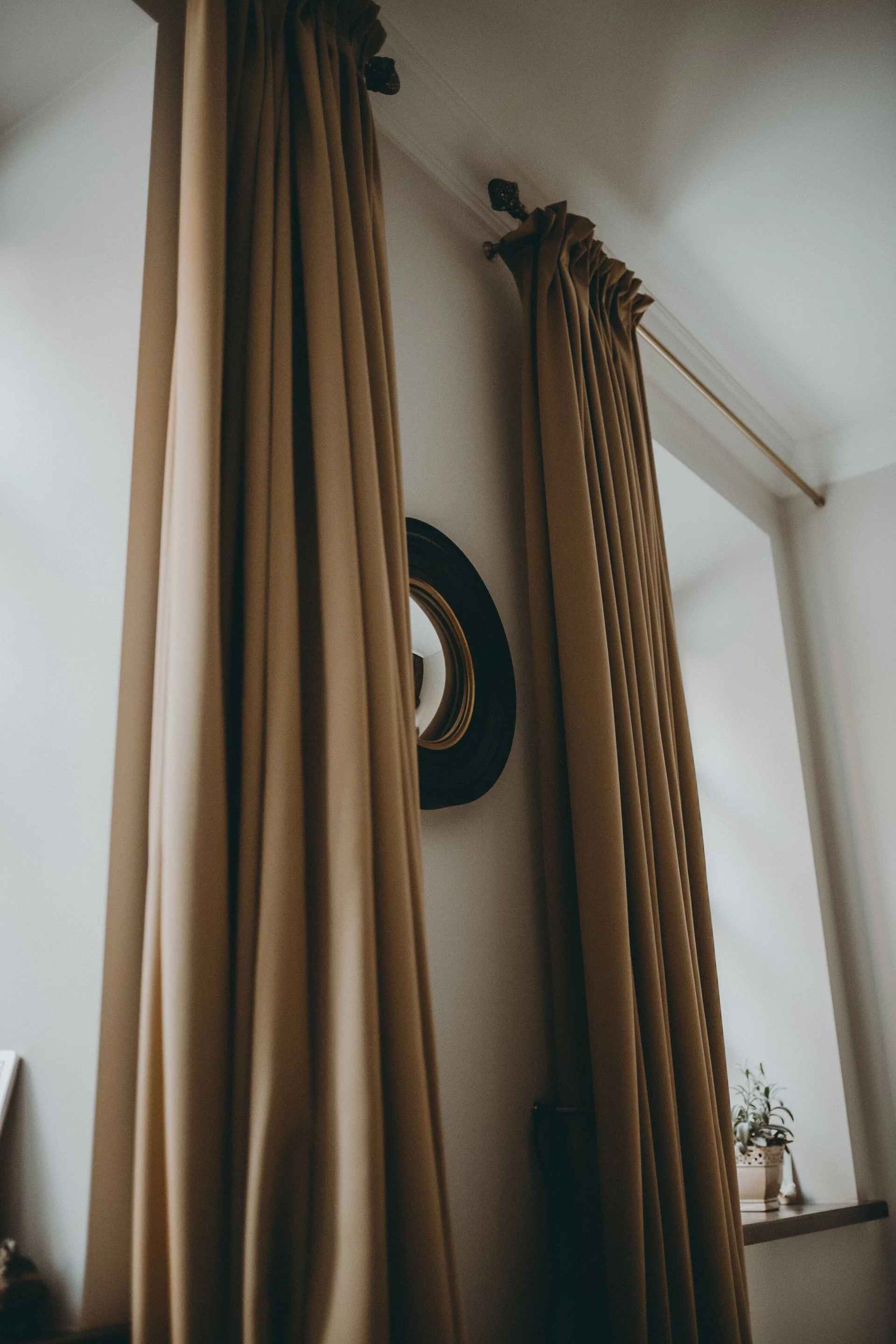
A layered window treatment gives the lighter curtain and the main curtain different jobs. A sheer can soften the appearance of daylight, while a separate main layer can provide additional coverage when needed. The useful question is not simply whether the colours match: it is how the two layers work in the room through the day and evening.
Define the purpose of each layer
List what matters at the window: glare, the view, visual softness, evening privacy or a darker sleeping environment. Do not treat these as interchangeable. An open sheer does not guarantee privacy when the interior is brightly lit, and a dense-looking main fabric is not automatically a tested blackout construction.
Look at the actual window from relevant sightlines and compare samples in daylight and after dark. If stronger light control is required, ask about the exact main fabric, lining and hanging arrangement. The treatment's gaps and coverage matter as well as its cloth.
Check that the hanging system supports two layers
Two independently moving layers need suitable hardware and enough space. Before estimating fabric, record the existing track or rod arrangement, the intended hanging points and any obstructions such as handles, furniture or a deep sill.
Ask the hardware supplier or a competent fitter to confirm capacity, clearances and stacking space. Avoid applying a universal spacing measurement: the correct arrangement depends on the chosen system, headings and the actual fabrics.
Compare undertones rather than matching names
Two fabrics both called ivory can look quite different together. Compare the sheer and main sample beside the room's paint, flooring and upholstery. A close tonal relationship can feel quiet; a stronger contrast can make the window more noticeable.
Hang samples in the intended order where possible. Light passing through the lighter layer can change the apparent colour of nearby surfaces. A large sample is more informative than judging two tiny chips under unrelated shop lighting.
Measure each layer as its own curtain
The sheer and main curtain may have different hanging points, headings, fullness and intended finished edges. Record those assumptions separately. Use the actual usable fabric widths and any verified pattern repeats when planning quantities.
Our measurement tool gives a preliminary estimate, not a cutting instruction. Confirm the final dimensions and allowances with the person responsible for making the curtains. Do not assume that copying the main curtain's figures will produce a correct sheer layer.
Use a preview for direction, then confirm the cloth
Dcorhome's manual Studio lets you explore supported main and sheer selections independently. Its sample-room preview can help you compare a palette. Some room references are view-only; a screen does not establish exact drape, fit, fabric content or light performance.
Save the design on your device or download a supported preview, then include the fabric references and questions in your enquiry. Confirm physical shades, hardware suitability and individual care instructions before deciding. A successful preview is a design aid rather than a stock or performance guarantee.